Showcase
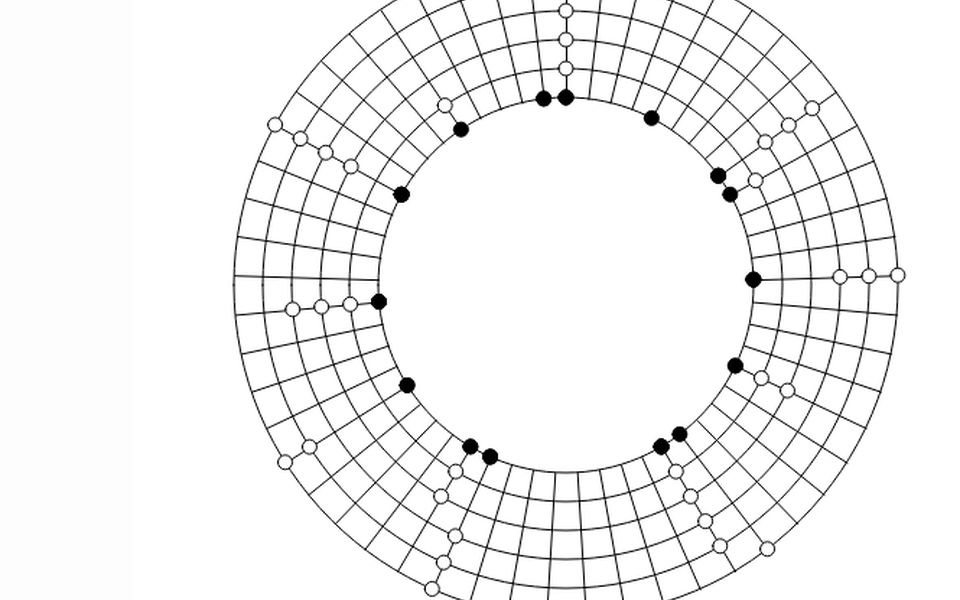
Newton’s pitch circle
Isaac Newton arranged the notes of the scale on a circle, like the colours of the spectrum. Click the sections of the circle to hear them.
Switch sound on (“on”), then click. Headphones recommended. Best on a computer.
Historical diagrams of tone systems, made audible. Click on points, circles and lines to hear the intervals the author drew. Created in the research project “Sound Colour Space – A Virtual Museum” at Zurich University of the Arts (ZHdK).
Project website: sound-colour-space.zhdk.ch ↗
Isaac Newton arranged the notes of the scale on a circle, like the colours of the spectrum. Click the sections of the circle to hear them.
Switch sound on (“on”), then click. Headphones recommended. Best on a computer.
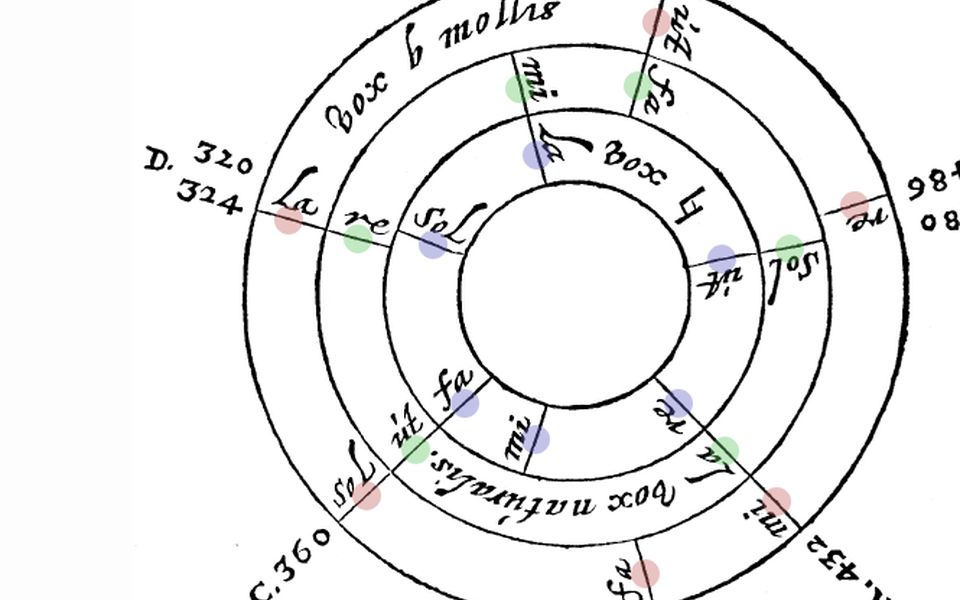
In his “Compendium Musicae” René Descartes shows how the hexachords interlock. Every note of the diagram sounds when clicked.
Switch sound on (“on”), then click. Headphones recommended. Best on a computer.
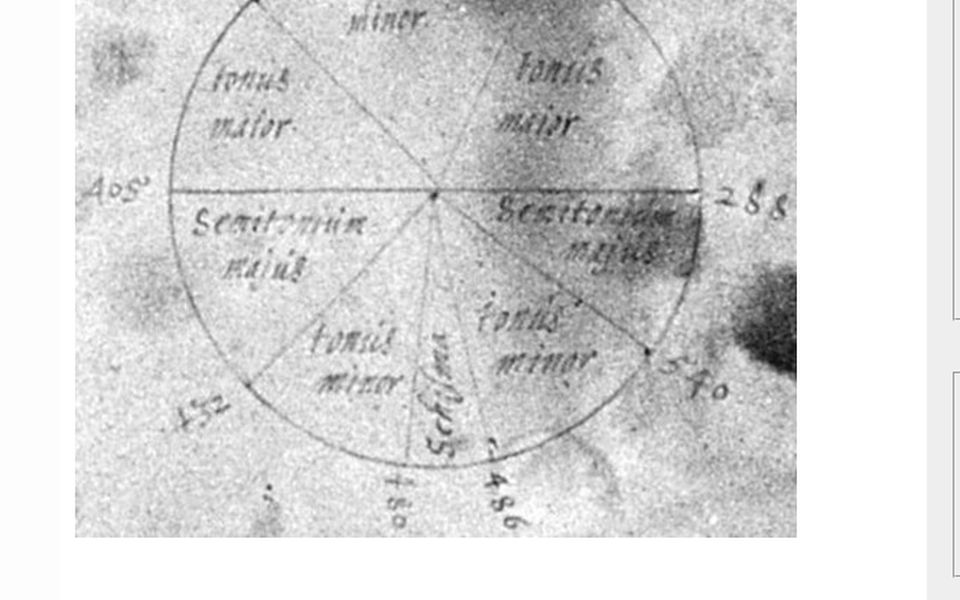
Descartes’ circle of the diatonic scale: major and minor whole tones and semitones as sections of a circle. The original illustration lies underneath; the points sound when clicked.
Switch sound on (“on”), then click. Headphones recommended. Best on a computer.
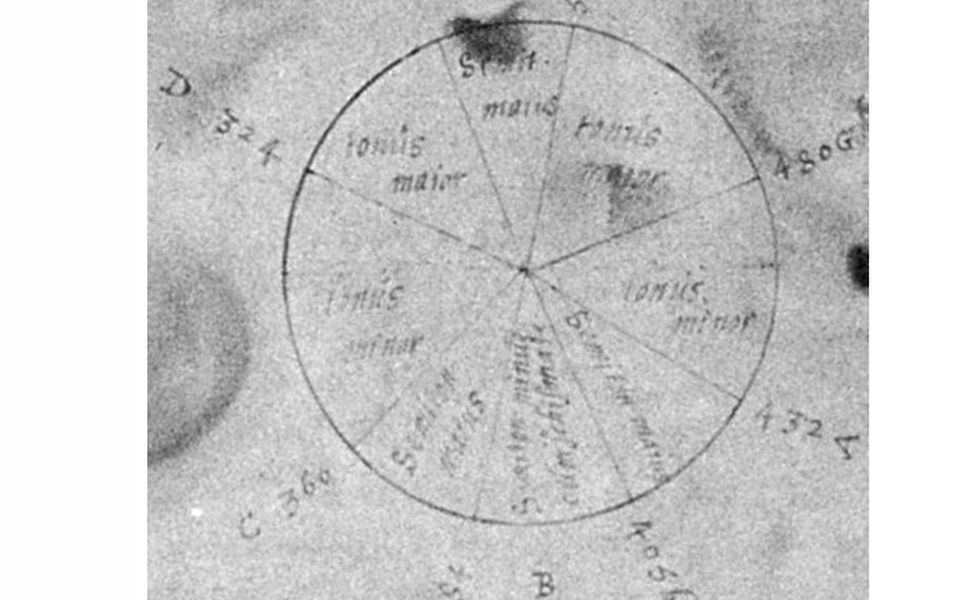
A second version of Descartes’ scale circle with a different division. The original can be shown or hidden, moved and rotated.
Switch sound on (“on”), then click. Headphones recommended. Best on a computer.
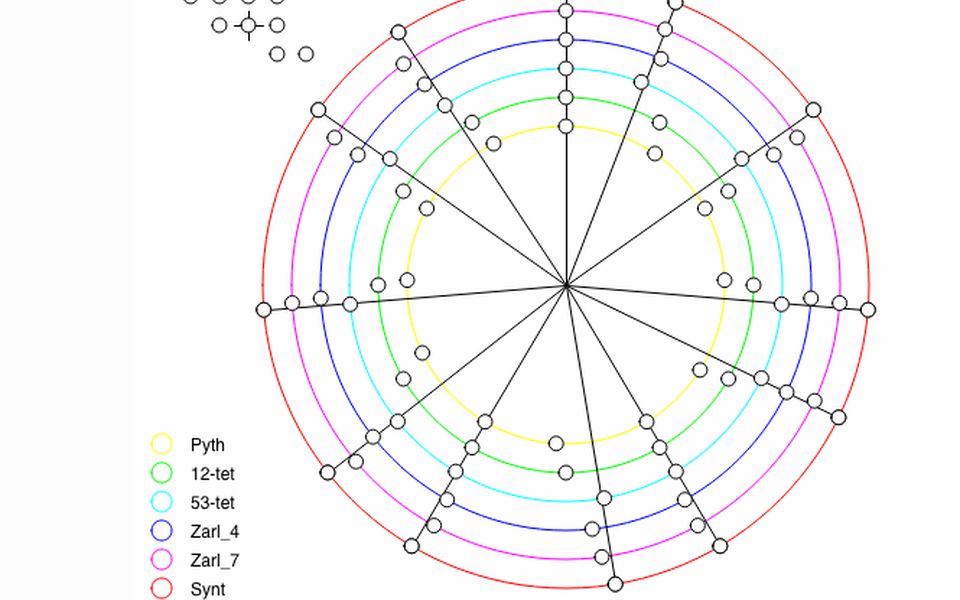
Several tuning systems as rings on one circle – Pythagorean, equal temperament with 12 and 53 notes, Zarlino and others – so the small differences between them become audible.
Switch sound on (“on”), then click. Headphones recommended. Best on a computer.
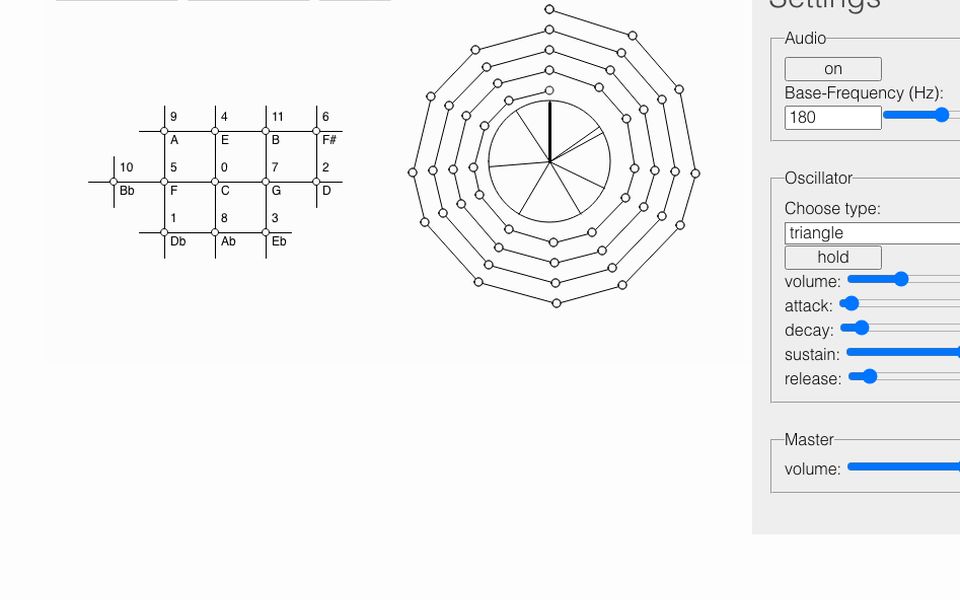
Just intonation as a spiral and as a note table after Mersenne: because fifths and thirds never quite close the circle, the tuning drifts outwards.
Switch sound on (“on”), then click. Headphones recommended. Best on a computer.